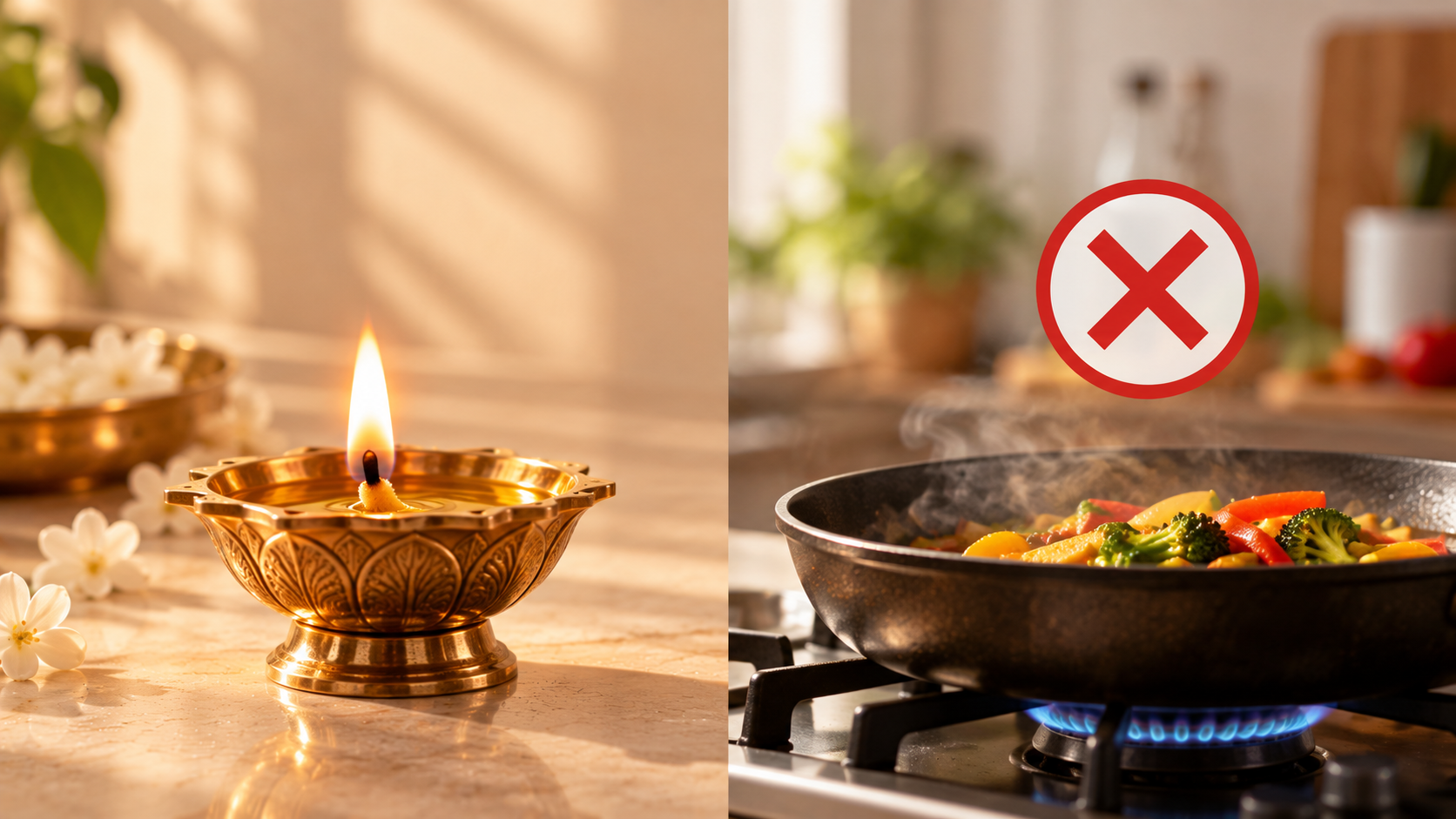
Which Pooja (Puja) Oil is the best for Indian Rituals?
Which Pooja Oil Is Best for Indian Rituals? Choosing a pooja oil depends on the type of ritual, regional traditions and personal preferences. Different oils…
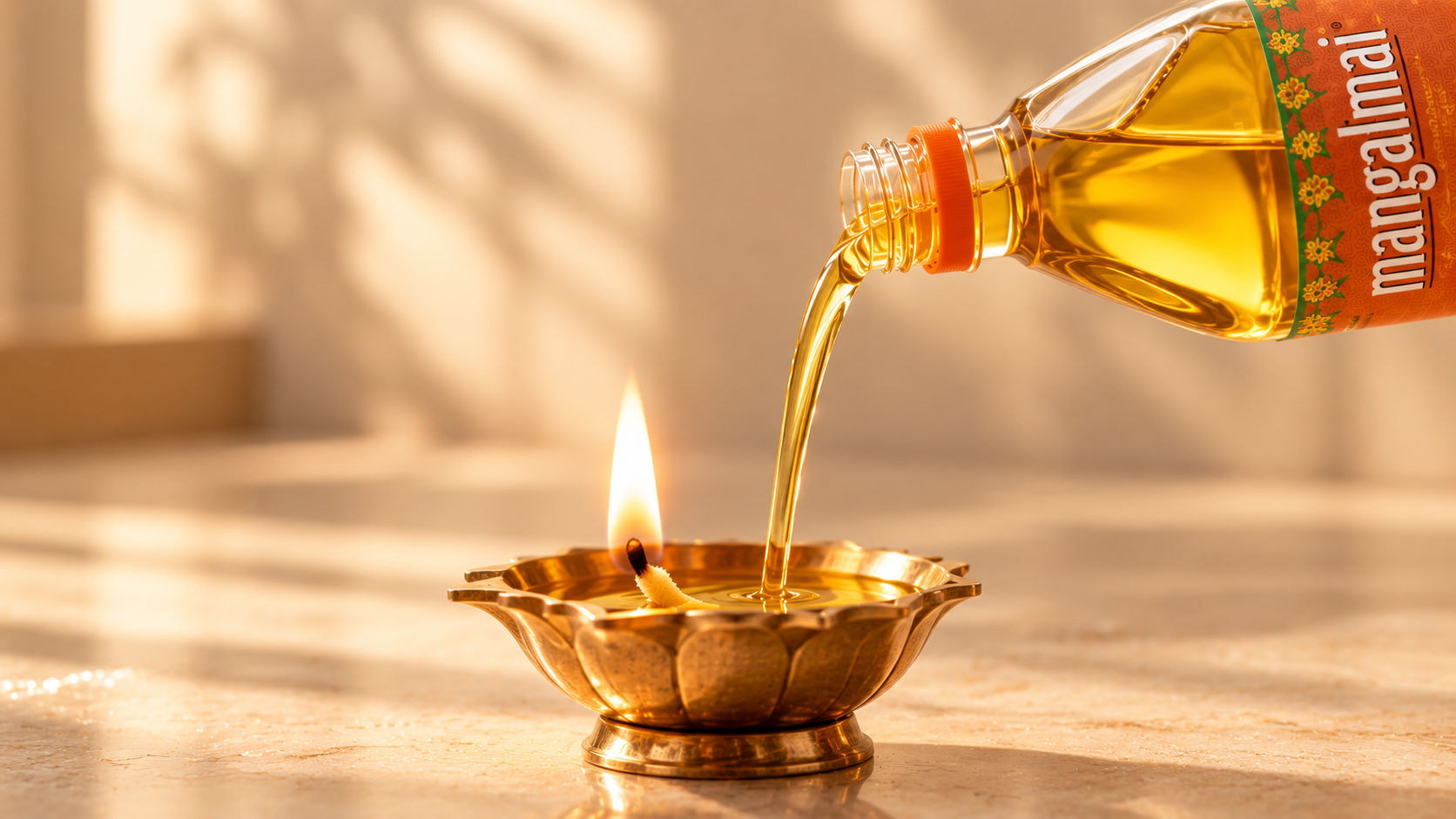
Which Pooja Oil Is Best for Indian Rituals?
Choosing a pooja oil depends on the type of ritual, regional traditions and personal preferences. Different oils have been traditionally used for lighting diyas, including sesame (til) oil, mustard oil and other specially formulated diya oils.
For everyday pooja, a good pooja oil should be suitable for diya lighting and provide a steady, consistent flame. Mangalmai Pooja Oil, made with the goodness of til oil, is specially intended for lighting diyas with no black smoke, long-lasting flame and can be used for daily prayers, festivals and special occasions.
Significance of Pooja Oil
Lighting a diya is an important part of many Indian rituals. The flame represents light, devotion and the positive spirit of a sacred space. The oil used in the diya also has a traditional significance and varies according to the ritual, region and family practices.
Til (Sesame) Oil
Til oil has a long-standing place in Indian traditions and is commonly used for diya lighting during various religious practices. It is particularly associated with certain devotional rituals and observances.
Mustard Oil
Mustard oil is also traditionally used for lighting diyas in several parts of India. Its use may vary depending on regional customs and specific religious practices.
Diya Oil Blends
Specially formulated pooja oils can combine different oils to create a convenient option for regular diya lighting. These blends are designed for everyday pooja as well as festive rituals.
When to Use Pooja Oil
- Daily Pooja & Aarti – For your everyday prayers and rituals
- Festivals – Diwali, Navratri, Ganesh Chaturthi and other auspicious occasions
- Temple Rituals – For diya lighting during religious ceremonies
- Special Occasions – During new beginnings, housewarming and other traditional ceremonies