Can We Use Pooja Oil for Cooking?
No, pooja oil should not be used for cooking unless the product is specifically labelled and certified for edible use. Pooja oils are formulated and marketed…
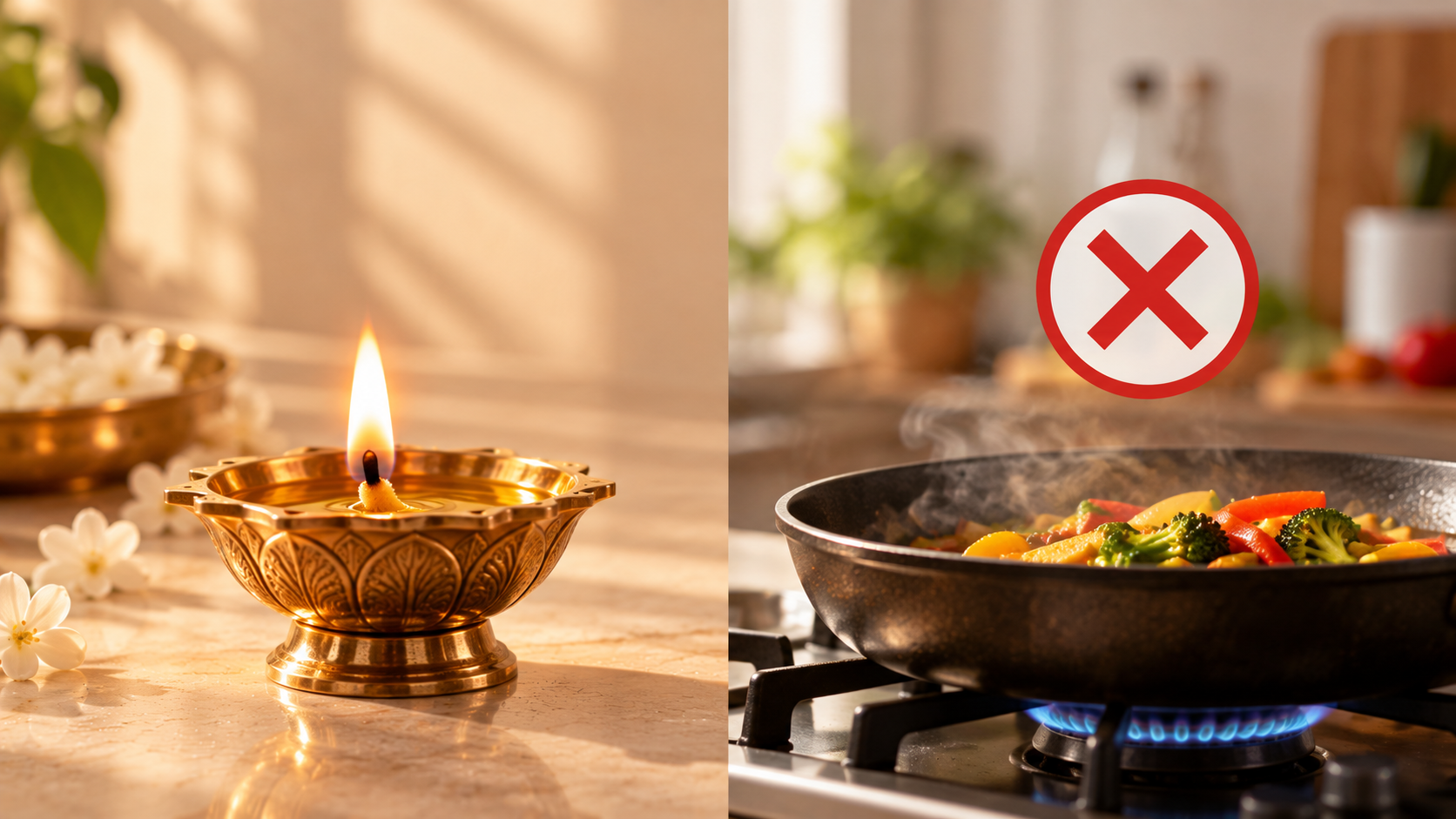
No, pooja oil should not be used for cooking unless the product is specifically labelled and certified for edible use.
Pooja oils are formulated and marketed for religious rituals, diya lighting and other devotional purposes. They may contain oil blends or ingredients that are suitable for lamps but are not intended to be consumed.
Cooking oils, on the other hand, are specifically manufactured, processed, tested and labelled for human consumption and need to meet applicable food-safety requirements.
Why Should Pooja Oil Not Be Used for Cooking?
1. Different intended use
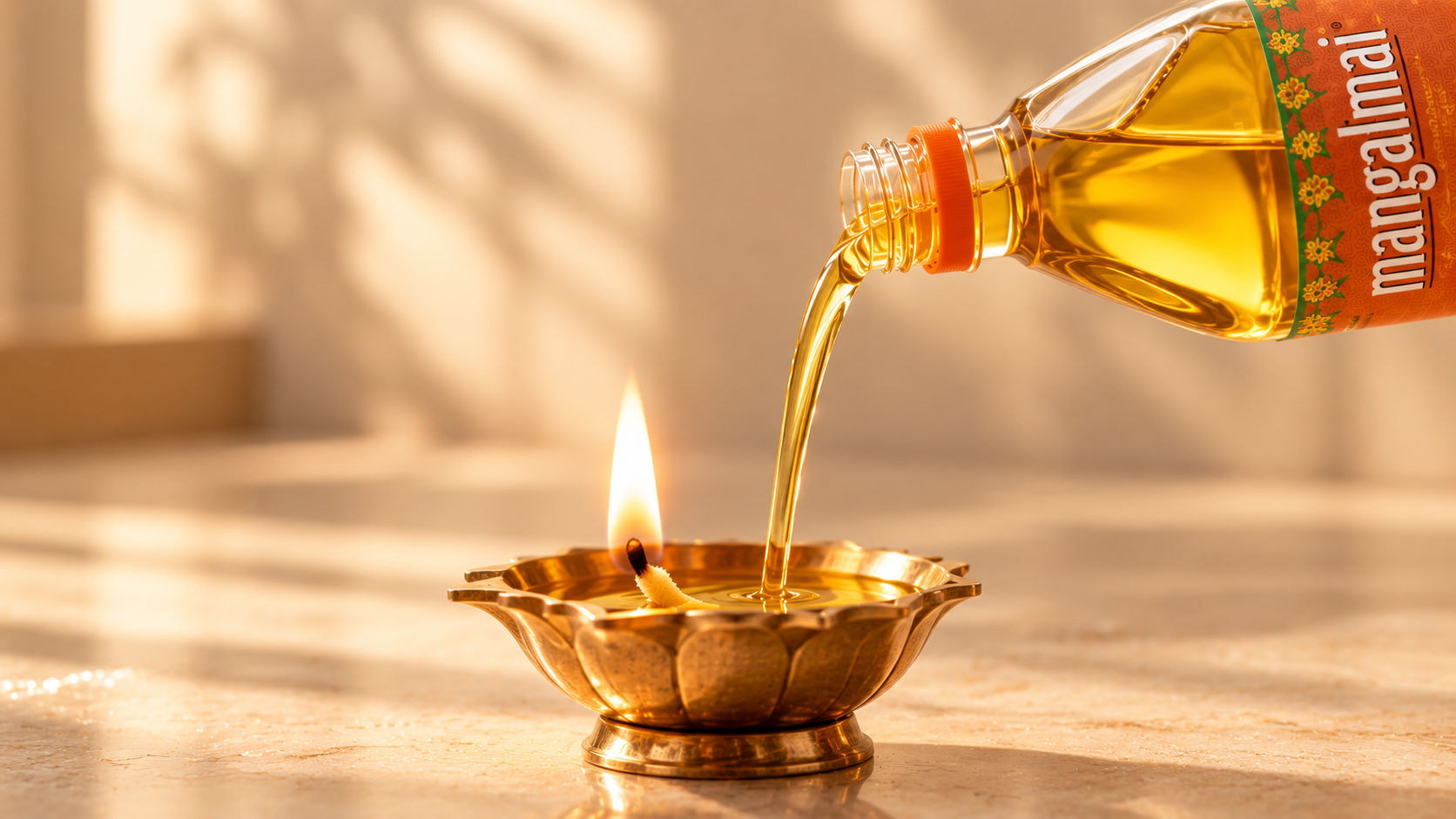
Pooja oil is intended for rituals such as lighting diyas, while edible oils are specifically produced for cooking and consumption. Mangalmai, offers a range of oils for different purposes, thoughtfully created with purity and devotion to meet the diverse needs of the customers. Pooja oil range includes Mangalmai Pooja Oil and Shubh5 Pooja Oil which consists of castor, mahua, neem, coconut and sesame.
2. Food safety requirements differ
An oil intended for consumption needs to comply with applicable food regulations and quality standards. A pooja oil does not become edible simply because it contains a type of oil that is also used in cooking.
3. Oil blends may be different
Pooja oils can contain blends designed to support diya lighting and flame performance. Their composition and specifications may differ from those of edible cooking oils.
4. Always check the label
The safest approach is to follow the product's intended-use instructions. If the packaging states “Not for edible use” or indicates that the product is meant only for pooja/diya lighting, it should not be consumed or used for cooking.