How to Light a Diya the Right Way: A Simple Daily Guide
Lighting a diya takes less than a minute, but a few small habits make the flame steadier, cleaner and longer-lasting. Here is a simple routine for your daily pooja.
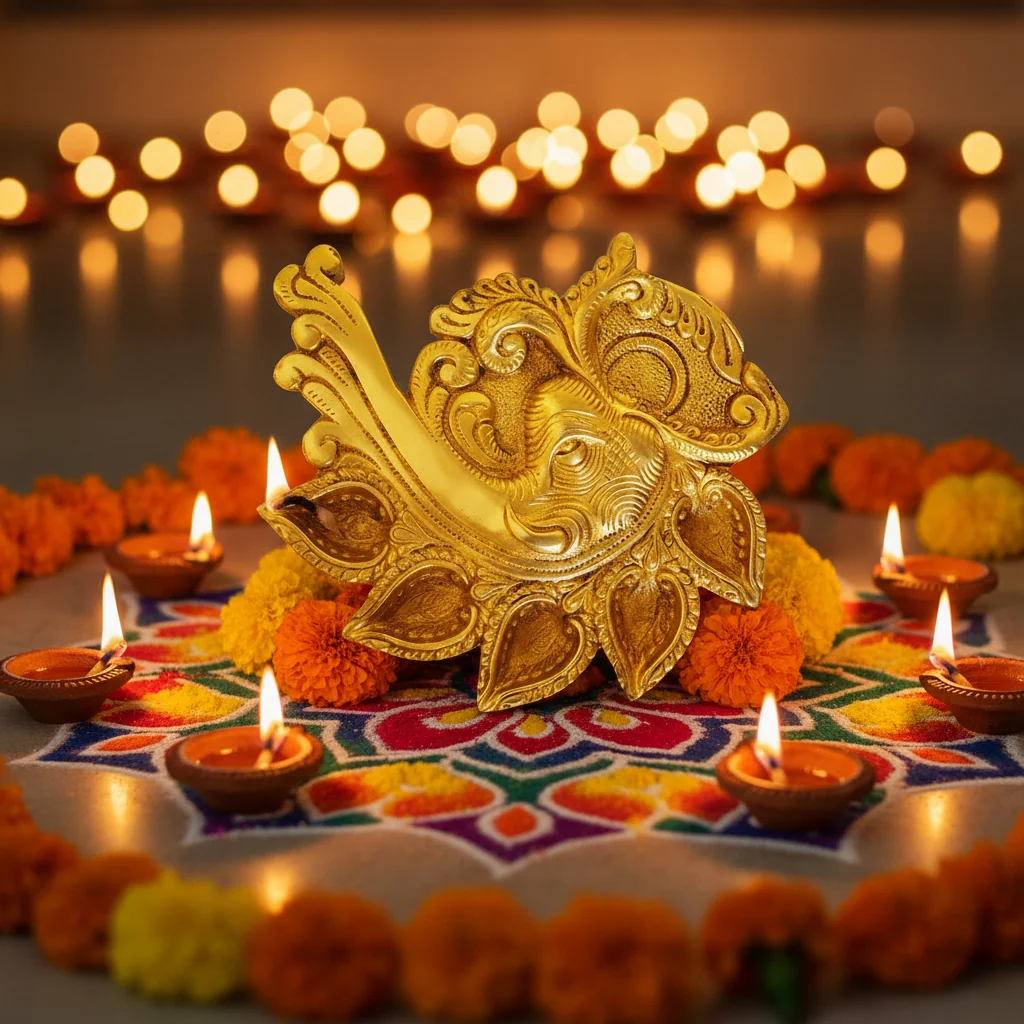
Lighting a diya is one of the simplest and most meaningful parts of daily pooja. The steady flame is a symbol of light over darkness, and of a calm, focused mind. With a few small habits, your diya will burn cleaner and for longer.
What you need
- A clean brass, clay or silver diya
- A cotton wick (phool batti or long batti)
- Pooja oil, such as Mangalmai pure vegetable pooja oil
- A matchbox or a small lamp to light from
Step-by-step: lighting your diya
- Clean the diya. Wipe away old soot and oil so the new flame burns evenly.
- Prepare the wick. Twist the cotton gently to a point. A tight, even tip gives a steady flame.
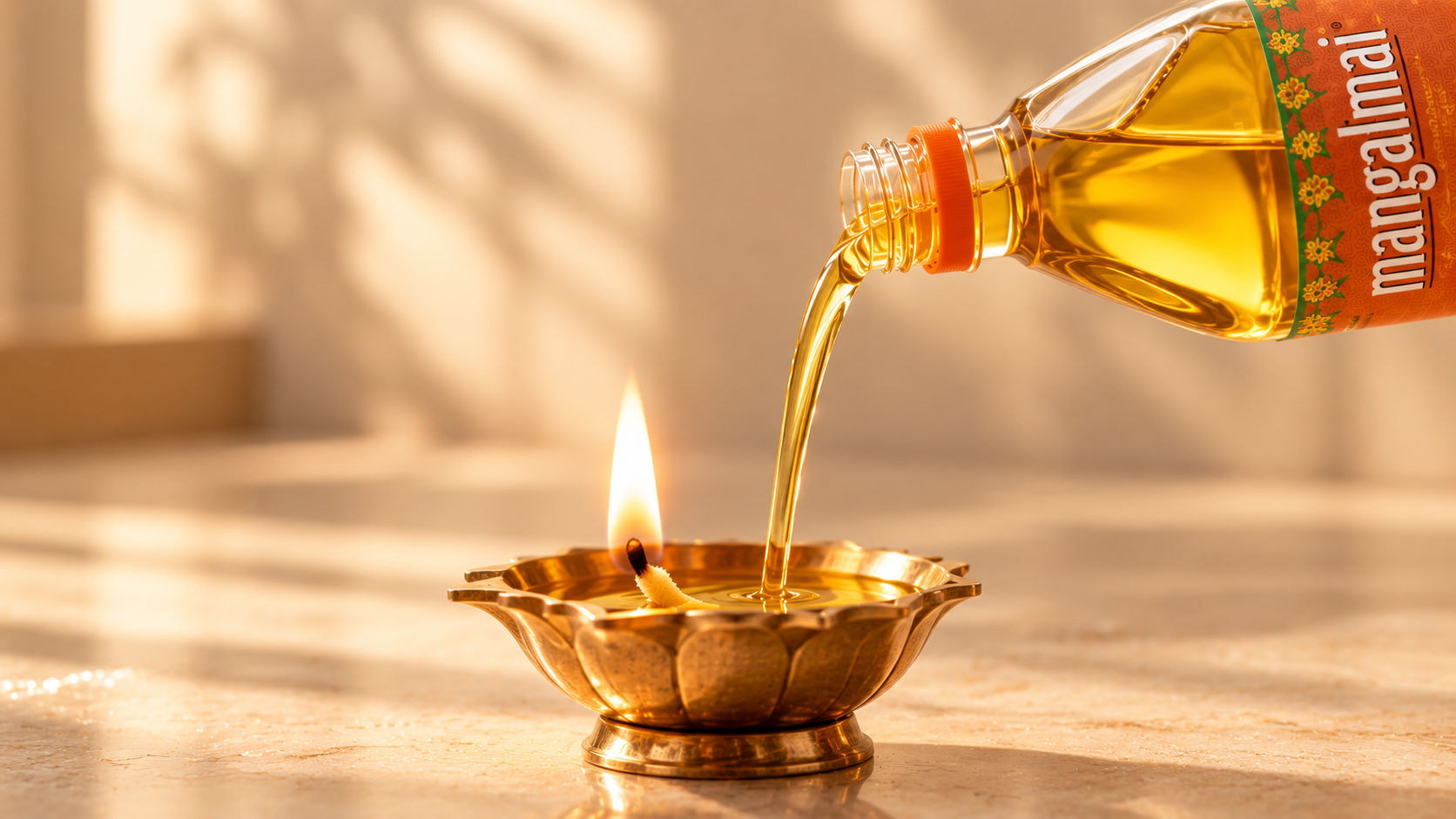
- Add the oil. Fill the diya about two-thirds full and let the wick soak for a minute.
- Place the wick. Keep only the tip above the oil; too much wick makes a large, flickering flame.
- Light and offer. Light the tip, then place the diya to the right of the deity and offer your prayer.
Tip: let the wick soak in oil before lighting. A soaked wick burns slowly and gives a bright, smoke-free flame.
Why the right oil matters
The oil decides how clean and how long your diya burns. A good pooja oil gives a calm, steady flame without black smoke, so your mandir walls and idols stay clean.
Mangalmai pure vegetable pooja oil carries the goodness of til oil and is made for a long-lasting flame. See Mangalmai pooja oil.
Common mistakes to avoid
- Using a dry wick that burns out in minutes
- Overfilling the diya so oil spills when you move it
- Placing the diya near curtains, paper or flowers
- Leaving the diya unattended near children or pets
Make this a calm two-minute routine every morning and evening. A clean diya, a soaked wick and good oil are all you need for a bright, peaceful flame.